
A note on prices: Prices and terms below are rough guides (as of 2026) and can change. The supplier’s own quote is what counts. Any tax pointers here are general orientation, not professional advice.
What club apparel is really for
“Club apparel” simply means the official clothing worn by everyone in a club. For sports clubs, that’s most obviously the match kit. But once you step away from match day, into training sessions or public events, plenty of clubs lose that single, recognisable look. It usually happens because one section orders a collection in green, the next orders something completely different in red, and the only thing tying them together is the club name printed somewhere on the chest.
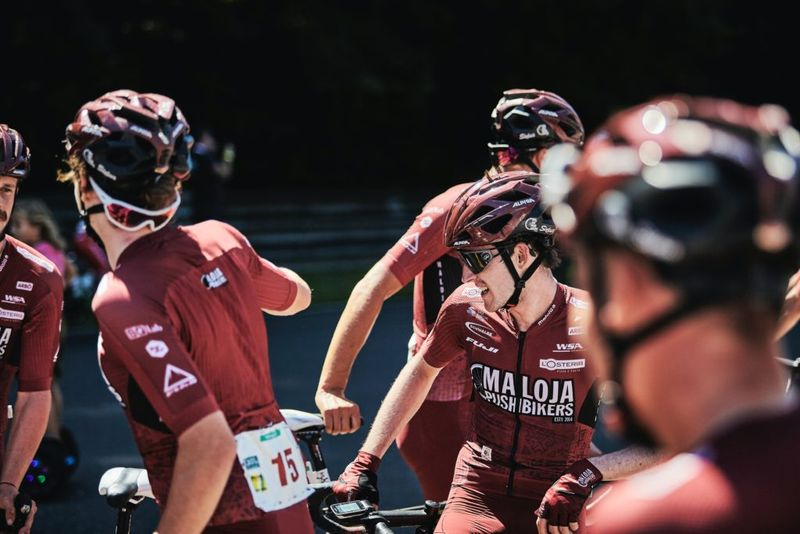
Now look at the big football clubs. At every official occasion, everyone wears the same kit, and an outsider can tell instantly which club they belong to. Internally, a shared look does something just as valuable: it builds a sense of belonging. Whoever puts the kit on is part of the team.
Does club apparel actually raise our profile?
Absolutely. A unified look does more than signal a tight-knit community. The more members who wear it, the more outsiders notice you, and the more likely it is that other members will want a set of their own. From there, the kit starts showing up beyond training, in the supermarket, at school or uni, in everyday life. And the impression is far stronger when a whole group turns up to a fixture or event in one consistent look.
Sponsorship and donations
Financial support from sponsors is an important income stream for a lot of clubs. It can come as money or as goods in kind, and while cash is usually straightforward, support in kind, kit included, is where clubs most often trip up. Getting it wrong matters, because the wrong label can come back to bite you when the books are checked.
Everything below relates to grassroots and amateur clubs. Professional sport is governed by different rules.
When is it a donation?
In the UK, the dividing line is simple: a payment is a true donation (and, for a registered charity or CASC, eligible for Gift Aid) only when the giver gets no significant benefit in return.
- The sponsor gives money towards the kit but the club is under no obligation to advertise them on it.
- The sponsor buys the kit for the club voluntarily, with no contract attached, and hands it over with no advertising printed on it.
- There’s no agreement between club and sponsor about how the kit is bought or used.
- At most, the club thanks the supporter in general terms, with no prominent, eye-catching branding.
The principle: it’s only a donation when there’s no consideration in return. The moment your club gives the backer a marketing benefit, say, a logo on the shirt, it stops being a donation and becomes sponsorship, which is a commercial exchange. A registered charity or CASC that receives genuine Gift Aid donations can reclaim 25p for every £1 given; it cannot do that for a sponsorship deal.
What about the club’s own tax position?
This is where it pays to be careful rather than confident. A kit-sponsorship deal where the sponsor gets advertising is treated as commercial sponsorship rather than a gift, but exactly how the income is handled on the club’s side, for VAT and corporation tax, depends on your club’s structure and turnover. The rules vary, and they change. Check with HMRC or a tax adviser before you commit.
As of 2026; tax rules change, so when in doubt, ask a professional.
Can’t find a backer locally? A quick search along the lines of “sponsor wanted, local club” turns up plenty of matchmaking sites.
Working with several sponsors
Got more than one sponsor and unsure how to share the space? A few common approaches:
The first is one sponsor per item. Sponsor X goes on the T-shirts, sponsor Y on the jackets, sponsor Z on the kitbags. Each one gets maximum prominence, but only appears on a single product.
The second is to vary the placement of each logo. On a training jacket, sponsor X sits on the back, sponsor Y on the chest, sponsor Z on the sleeve. Everyone appears on every item, but the logos are usually smaller and print costs a little higher, because there are several separate prints.
The third is a sponsor pool, where all the logos are grouped together and printed as one block in a single spot. Print costs are lowest, since it’s a single print, but each sponsor is shown small.
Still weighing up which print technique to use? Here are the most popular methods.

Print techniques
Heat-transfer vinyl (HTV)
The design is cut from thin coloured vinyl film and then heat-pressed onto the garment. The finish is smooth, matte, and slightly stretchy. This method is favoured for smaller quantities and smaller designs, since over large areas it reduces both comfort and breathability.
Pros:
- Bright, intense colours
- High opacity
- Long-lasting
- Works on any fabric colour
Cons:
- One to three colours only
- No gradients
- Each colour needs its own cut and press
Special / effect vinyl
As the name suggests, this is for something out of the ordinary. A thin film is fused to the fabric under high pressure and heat. The finish is smooth and not stretchy.
Pros:
- Glitter, neon, holographic, and reflective effects
- Very durable
- High opacity and crisp edges
- Bright, intense colours
- Works on any fabric colour
Cons:
- One to three colours only
- No gradients
- Simple designs and lettering only
- Garments should be hand-washed
Flock printing
Flock is often used for sports and club kit, because the finish is velvety and stands slightly proud of the fabric. The flocked film is applied to the garment. It suits small runs well.
Pros:
- Very long-lasting
- High opacity and intense colours
- Especially good for lettering and logos
- Works on any fabric colour
Cons:
- One to three colours only
- No gradients
- Each colour needs its own cut and press
Screen printing
Screen printing (silkscreen) is a stencil process. Ink is pushed through a fine mesh screen straight onto the fabric, with no transfer medium needed. It’s the standard method for cotton garments and the best choice for very large runs.
Pros:
- Highly wash-resistant
- Vivid colour
- Long-lasting
- Cheap at high volumes
Cons:
- Cost rises with the number of colours
Direct-to-garment (DTG)
The ink is sprayed straight into the garment, so it doesn’t affect comfort. DTG comes into its own when you need complex, multi-colour designs. The finish is slightly stretchy.
Pros:
- Unlimited colour choice
- Brilliant colours
- Detailed designs
- Very long-lasting
- High opacity
- Gradients are possible
- Works on almost all cotton and cotton-blend fabrics
- Especially easy to care for
Cons:
- Not possible on every fabric
- No neon or special colours
Dye-sublimation
A special ink is printed onto coated transfer paper, then fused directly into the fabric fibres under high heat and pressure. The catch: the garment needs a certain polyester content for sublimation to take. That makes it perfect for performance shirts. Because the dye becomes part of the fabric, the print is imperceptible to the touch and very stretchy.
Pros:
- Performance fabrics stay breathable
- Brilliant, detailed results
- Extremely durable
- High opacity
- Colour is printed straight into the fibre
- Breathability is fully preserved
Cons:
- Loss-free printing only on white polyester
- No neon or special colours
- Faint marks from the transfer paper can appear
- Not possible on every fabric colour
DTF / digital transfer
A special film is printed and cut to shape, then the design is applied to the fabric with a transfer press. Because the design sits on top, the finish is slightly perceptible and slightly stretchy.
Pros:
- Unlimited colour choice
- Brilliant colours
- Detailed designs with sharp edges and fine detail
- Very long-lasting
- High opacity
- Gradients are possible
- Works on almost all cotton and cotton-blend fabrics
Cons:
- Not possible on every fabric
- No neon or special colours
- Pantone colours can’t be matched exactly
Embroidery
Here the garment is finished with stitched thread rather than printed ink.
Pros:
- Outstanding quality
- Extremely wash-resistant
- Very robust and flexible to work with
Cons:
- Can’t be applied to every product
- Custom designs only by prior arrangement
Costs
As a rule, club apparel counts as spending in line with the club’s charitable or sporting purpose, as long as it’s genuinely clothing worn almost exclusively for club occasions.
If a choir, for example, decides everyone will perform in white blouses or shirts and black trousers, it’s hard to call that “club apparel”, since those clothes are just as wearable away from the club. Print the club crest on the breast pocket, though, and you can reasonably argue the clothing is worn almost only for club purposes.
Who pays for it?
A printed club T-shirt won’t break the bank, but more elaborate gear can quickly run into the high hundreds per full kit. So how do you fund it? A few models work well:
- Members buy their own apparel at their own cost.
- The club buys the apparel and members pay a contribution. They take their kit home and look after it themselves, and return it when their membership ends.
- The club buys the apparel and runs a “kit store”, keeping and maintaining the garments centrally and issuing them to members as needed.
How is the cost treated for tax?
This is genuinely structure- and turnover-dependent. If the club foots the whole bill, the spending is usually treated as part of running the club’s core activity. If members pay all or part of the cost, that contribution is effectively income from reselling the kit, which may fall into a different category for tax. The rules vary, so confirm the treatment with HMRC or a tax adviser.
As of 2026; tax rules change, so when in doubt, ask a professional.
Fitting and sizing
With the paperwork sorted, on to the fun part: the fitting. Before you order in bulk, get at least one of each size and variant in so people can try things on. From there you have options. Either bring the samples to training a few times and order once everyone has logged their size, or set a single date when as many members as possible can come along. The order form with sizes can live online or be passed around on paper. A shared poll or sign-up in your club’s app makes collecting sizes far less painful than chasing people one by one.
Will anyone actually buy it?
There’s always a bit of pushback that club apparel is dated and past its time. Younger members in particular often struggle to identify with it. It lacks the “cool” factor and the reason to wear it, when Nike trainers and an Adidas tracksuit do the job just fine. So how do you get members to buy it and wear it? A creative, memorable design that works across every age group is part of it. But the mindset has to be there too.
Why do I wear the club kit? Do I identify with it? Am I wearing it because I want to or because I have to? The more closely you listen to what members actually think, the better you can shape the apparel and make it appealing to everyone. And maybe the tracksuit ends up cool enough that everyone wants one ;)
Either way, take the temperature first. Who’s interested, and where might demand be high?
Alternatives
T-shirts, jackets, bags, the average teenager’s wardrobe is already full of them. So why buy another shirt that ends up stuffed in the back of a drawer, unworn? Why not try something a bit different? Have you thought about socks printed with your logo? A cap? Stickers for a water bottle or laptop? Or a pair of sliders?
Pros and cons
Pros:
- Creates and strengthens a sense of community
- Presents a united team to the outside world (at fixtures), boosting your profile
- Hides social differences (especially to outsiders), defusing one-upmanship
- Members grow closer, building a sense of belonging
- No more agonising over “what to wear”
- New members integrate far more easily
- Better team spirit
- High recognition value
Cons:
- Even shared kit can’t completely rule out exclusion
- Outsiders might write the chosen kit off as “old-fashioned” and judge the club for it
- You’ll probably never please everyone with the design
Suppliers
Search “custom team kit” and you’ll be drowning in results. Here are some of the best UK and international options.
A note on suppliers: Ranges, brands, and terms change (as of 2026), and custom teamwear is almost always quoted per order. Always check the latest directly with the supplier.
Owayo
Owayo makes 100% custom kit, from football and basketball to ice hockey, cycling, and running, and produces Made in Germany in Regensburg while shipping right across Europe (including a dedicated UK site). A 3D configurator lets you design your own kit, with names, numbers, and crests already included in the price. Handy detail: Owayo produces anything from 1 to 10,000 pieces, so it suits both small teams and big clubs.
Pendle Sportswear
Pendle is a UK grassroots-football specialist that’s been making teamwear since 1977. Designs are done in-house and supplied factory-direct, which it credits for some of the fastest turnarounds in the UK, with fully printed kits dispatched within around 48 hours of artwork being signed off. It positions itself well below typical retail, advertising prices from approx. 40% under RRP.
Kitlocker
Kitlocker supplies football shirts and teamwear to clubs, schools, universities, and sports organisations, mixing major brands with custom options. It runs an online club-shop model, so members can order their own gear directly. Pricing is quote-based, so ask for a current quote.
My Club Group
My Club Group kits out clubs and schools across the UK with custom sportswear and teamwear. It sets up free online club shops and offers bespoke designs, taking the admin off the committee’s hands. Pricing is quote-based.
MG Sportswear
MG Sportswear is a UK manufacturer of custom football kits and teamwear for every level, working in sublimation, embroidery, and print. Going direct to the manufacturer can keep costs down, though, as with most custom kit, you’ll want a quote for your specific order.
Custom Planet
Custom Planet is a strong choice for casual club merch rather than match kit, T-shirts, polos, and hoodies finished with in-house print and embroidery. Bulk discounts apply, with exact pricing quoted per order.
Spreadshirt / TeamShirts
Spreadshirt and its TeamShirts brand offer pan-European print-on-demand for personalised sportswear and team gear with no minimum order, which is ideal when you only need a handful of items or want members to order individually. Pricing is per item, with no setup fees, and bulk discounts of up to around 60% despite the customisation.
Where Klubraum fits in
Klubraum isn’t a kit shop, but pulling an apparel order together, or lining up a sponsor, is exactly the kind of coordination it’s built for. It’s a communication and organisation app for clubs and teams: topic-based chats, a shared calendar, polls, car-pooling, a member directory, and a digital membership card, all in one place. Use a poll to gather everyone’s sizes, a chat to agree on a design, the calendar to set a fitting date, and the member directory to reach the people you need, no spreadsheets, no group-chat chaos. Klubraum is free to use, GDPR-compliant, and trusted by over 300,000 users with a 4.6/5 rating.